Man in the van

This afternoon, I went to the market.  As I was locking my car, I noticed an old man in the driver’s seat of a van.  His head was down, as if sleeping, and my idle mind thought “Oh, he’s probably having a nap, waiting on the wife.”

In about fifteen minutes, I came back out.  He was still in the same position, so I went over to his window to check on him.  He had a book propped up against his steering wheel, and looked as if he might have fallen asleep while reading.  I stood there for another minute or so, to see if he was breathing, and he was.  I left without trying to wake him up.

My wife said I should have.  I think she was right.

Periwinkles

They headed down the valley
With their wine and picnic lunch.
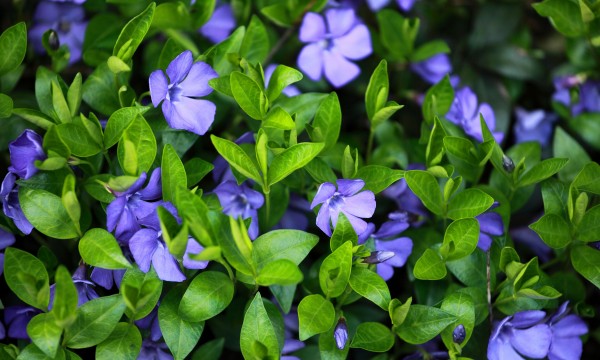
The periwinkles blooming
They gathered by the bunch.
Happily remembering
The times that they had spent
As children, in the old ravine
Inside a makeshift tent.
With jam and jelly sandwiches
They’d huddled from the rain
And hoped that in the days to come
They’d be there, once again.
Soon they would be parted, though
Still children, and they wept.
They’d always been the only ones
Whose promises were kept.
Two decades passed, the wheel had turned
They never did forget.
And often looked within their hearts
Without the least regret.
Close unto this very summer
He thought of her once more
And prayed that he would find her
As lonely as before.
A fairytale friendship
Remembered o’er the years
Had sent him on this errand.
He’d not forget their tears.
Now he was a grown man
And thought she must be married.
Indelible the memory was
That in his mind he carried.
Back to their old school he went
To ask where she had gone,
But none knew of her whereabouts.
They said that she’d moved on.
Please tell me where, and name the town!
He cried, and someone spoke-
The old and grizzled janitor
Whose memory then awoke.
Away now, with the precious answer
He went with all good speed,
And sought her out, for days it was
He’d not paid any heed
The search had finally led him
To a dark and dingy bar.
She’d worked there as a waitress.
T’was said she had a scar.
And that was how he found her.
He would not have recognized
Her face, so drawn and haggard
But still, she mesmerized.
She waited on his table. He touched her hand and said
“Lissa, do you know me?”
She slowly shook her head
He spoke his name, and handed her
A jam and jelly sandwich
Her eyes grew wide, and then she cried
O’er the scars that marked her damage.
A man she’d met and stayed with
(She was so all alone)
Had used her as his punching bag
And cut her to the bone.
Remembering the long ago
And the tent in the ravine
Her heart within her melted
And they quit the ugly scene.
To his own, he took her
And let her rest in bed
He waited on her day and night
And caressed her weary head
Whole had she become now
And when this day had dawned
They went to pick the periwinkles
Of which she was so fond.

Dejection

His ears have been ringing for thousands of days,
as from a hard slap, but it stays and it stays.
A similar sound to a siren that plays
without losing its pitch pipe perfection.

A strangling snake seems to coil, and to tighten.
Never to loosen, never to lighten.
Its singular purpose to cow and to frighten,
‘Til its victim has no clear direction.

His nose, it is running.  His stomach, it churns.
There is no surcease from the acid that burns.
The doctors have done all their tests, and he learns
that there is “no disease, or infection”.

“My bones out of joint”, as was said in the Psalm
“My heart melting like wax”, with no spiritual balm
“I am poured out like water”, there’s nothing to calm,
and no miracle cure or injection.


All too common, our souls tell this harrowing story.
We cry out to someone (the Power and the Glory?)
We regret, we repent, and we say we are sorry.
We’ll accept any kind of correction.

Will forgiveness be ours, now our life is in doubt?
Can our guilt and our sin and our debt be wiped out?
If we care, then we’ll know what this story’s about-
We are called His Divine Imperfection.

My Wife Story

She works all day, all week
Nigh to thirty years at the same mundane place
Nothing to show but her name in the company newsletter
And a couple of gold pins

But wait….there are many friends she has made
She is a charitable soul
Helps the food bank
And a family that’s in need
Offers rides to those she knows
That are walking in the wicked weather

We have a house, bigger than we need
It’s half empty now
I’m retired, with flagging health
It’s been a year now

Home she comes, after each long day
Yet still looks for more work to do before her chair time
(“What’s that spot on the floor?”)
Cleans invisible dirt, rearranges the cupboard
I bring the tea, now it’s chair time
Back she reclines, attracting the three lap cats
Off she dozes

I see her bones are getting tired
But she will not hear a mention of it
Keeps storing and storing more nuts for the winter
There’s an illness she has that she will not attend to
I am exasperated to tears sometimes
But she says she feels fine, just let her alone

Forty plus years we have spent in this marriage
That means something
Fights we have had
Silences we have had
Tired of one another we have been
Unfaithful in the heart have I been

But as I set this down, I think
That without her,
I would drown.

Loss and blame

A person very close to me met his death, at a young age, some years ago.
Cancer it was, and it spread very rapidly, a “good thing” for those of us who loved him.
Like many of us, he had his faults and sins, and had been an alcoholic and a heavy smoker for some years. I understand the emptiness of people who fall into these addictions, and I have seen the finger pointing of some who blamed him for his own demise.

I cannot and do not, because I loved him and sensed that many times he was looking for help that no one could give. If anything, I wear my own guilt for not seeing it sooner and trying harder.

There was a night, in better times, when a few of us went to a New Year’s Eve party. He had planned, wisely, to stay in a nearby motel. My wife and I had chosen to drive, so I had to abstain from drinking more than one beer. It happened that he and I were alone at the table when he got up to make a second or third trip to the bar. He came back with two bottles of beer, and slid one to me, saying “come on, it’s New Years”. I said I couldn’t because we had a long drive ahead of us. In a few minutes, he had finished the two, then looked at me with a downcast expression, and said “I love you”. That was all.

When we first heard of his diagnosis, I panicked, and wanted to see him right away. He had an appointment with the Oncologist the next day, so I went along with him and his partner. As we were walking down the hospital hall, he turned to her, and then to me, and said “I’m sorry. I’m sorry.” All three of us wept then.

He was given only a short time, and was adamant that he would spend it at home, so a hospital bed was brought there and he had periodic visits from a nurse. On the last two nights of his life, I stayed at his home, but had gotten very sick with influenza. At one point, he actually got out of his bed and stood up, saying he had to go pee. I embraced him tightly, and said “it’s alright, just go”. It was as black as coke. With the emotional stress and illness, I had to leave the next morning.

That afternoon, he was gone.

Sing Sing

I sing.  I have sung to myself since the tender age of 12, when music first reached me.  I begged for a guitar, and one finally came at Christmas time.  A couple of days beforehand, I did a devilish thing.  Searched our apartment while Mom and Dad were out.  Found the guitar underneath their bed, already wrapped.  Peeled back the tape, and opened the box.  I was fascinated, thrilled, and guilty all at once.  By the time they came home, I had taught myself the opening riff to “Day Tripper” and had put everything back as it was.

That was more than fifty years ago, and, since then, I’ve always had a guitar of some sort.  I have played and sung for my own pleasure, and (shyly and tentatively) at campfire gatherings and such.

A decade ago, I started a new job, and became friends with a fellow who happened to be a player as well, although I did not know it at the time (nor did he know that I played).  He invited me to his home for a get together, and showed me a music room that he had set up downstairs.  He and a couple of other fellas had kind of an informal band, and they had been playing together for some time.  I enjoyed sitting and listening to them, and my wife and I were invited back again, as they had a monthly music night.

One night, he and the band were practicing “Paint it black” by the Stones.  They were getting the guitar parts down pretty well, but had trouble with the vocals, whereupon my friend Michel said “Lee, why don’t you get up here and try it?”  It was a song that I knew well, and, struggling with stage fright, I stood for the first time in front of a microphone.  I passed the test, carrying the tune the way it was supposed to be sung, and was eventually asked to join the band.

Since then, we have practiced each month, and have performed in public at such venues as churches, school functions, and as a part of outdoor concerts.

If you have ever been part of a band, you will know that there is a group dynamic at play, much of the time.  Seldom (at least, in our case) is there harmony.  Pardon the pun.  Personalities clash, there are disagreements on how to play, who should sing, and it sometimes becomes a competition.  I know that each of us wants the result to sound good, but it frequently takes a long time, with many false starts, and, occasionally, the dropping altogether of a song that we cannot come together on.

At our monthly practices, we are fortunate to have a certain captive audience, composed of spouses as well as friends who come and go.  Many times, there are guest musicians who join in with us.  Michel has a big dining room, and, with the addition of some makeshift tables, sometimes upwards of 30 of us sit down for potluck dinner on music nights.  Each December, we have gathered for Christmas carols at his sister’s house.

These are just some of the things that I do so look forward to in life.

A Night at Pinetop’s Tavern

The best piece I have read in some time.

Brighton Rose's avatarBrighton Rose

Somewhere in the back alleys of the city’s older section there was a crumbling brick building that had been around since before ragtime music was popular. Hanging above a faded green door that led down to the building’s cellar was a wooden sign, and despite the peeling paint, you could still make out the bar’s name: Pinetop’s Tavern.  Nobody really knew when Pinetop’s first opened; local folks would tell you it had been there since time began, and the world had grown up around it. It was one of those places where the lighting was always dim and the cigarette smoke never dissipated and the cloud you were breathing now had probably been around since W. C. Handy was still alive.

Pinetop’s Tavern was a blues joint, and it had been around almost as long as blues music itself. Blues music was a lot simpler than most kinds of music—simpler…

View original post 2,218 more words

Jovian

The Music of the Greats
Charges the very neurons of the mind
They glow brightly
As if from a sudden injection of quicksilver
I think

And the ones that are the keepers of memory
Secrete themselves and wait until called,
Often in times of great need.

Cadence, phrasing, pauses,
One note eyeing and speaking to the next
Uttering thoughts high, and thoughts deep.
Causing anticipation, and great desire to hear
What is next?  What is next?

Can this be of humankind’s making?
Yes!  That is why we call them the Greats.
They have used all that was given to them,
And have shown it unto us
As something of beauty and power and permanence

Like the magnificent storms upon Jupiter.

Small things bring a smile

Lay on the bed
Body like lead
It’s already half past the noon

Swallowing guilt
For this brick wall you’ve built
That blots out the sun and the moon

The Doc gave you pills
For the cure of these ills
But you still feel like going to Confession

And you cannot revive
Or feel half alive
For your friend is the devil Depression

All at once you can hear
A soft purr in your ear.
The pussycat wanting to play

It assumes the position
And now it’s your mission
And the first time you’ve laughed the whole day.

From Thralldom to Salvation

“Are you an anxious person?”, the therapist said.

Our man then recalled the thoughts and emotions that preceded his blackout at the wheel on that wintry night not so long ago.  He had awakened, after what seemed only a few seconds, with his car in the ditch, a fat lip, and a bloody nose.  Otherwise, physically undamaged.  It had been the scare of his life, and he was still jittery and shaking.  Presently, he called for a tow truck, and was glad of the delay that allowed him to collect his thoughts.

“I wouldn’t say so.  At least, not until a few months ago”, he responded.

He then had to relate the unnatural attraction he had developed for a girl he had not even met, and how it had mushroomed to bring him to this state.

“Your tests, scans, etcetera, have all come back normal, and now here you are with me.  Are you aware of what stress, even the emotional type, can do to a person?  I believe your blackout was a “shutdown” reaction to the conflicts within your mind.  You have been close to losing control.  There is something called Situational Depression, and your symptoms are very close to this.  I will prescribe you some medication which should help, but you need to see if you can get some closure on this.  If you’re willing to risk seeing this girl just to tell her your feelings, then talk to family and friends, discreetly, if they are involved, and find out what to do.”

After some hard thought, and hearing that his nephew’s band had an upcoming date at another tavern, he contrived to be there that night, while his wife was otherwise occupied.  Knowing his guilt, but acting as casually as possible, he asked if they had any memory of “that odd looking dancer” from where they had played before.  His nephew grinned, and said “Oh, that’s just Sydney.  She’s there almost every Saturday night.  Just a fun loving kid, and doesn’t hang out with anyone in particular, I think.  Dances by herself most of the time.”

In the end, when he learns that the band will be back at their old bar for an encore, he makes it a night out, knowing that family and friends will once again be there.  It’s the same loud crowd, the band competing with them, and, after an hour or two, Sydney is there.  His wife says “Isn’t that the same girl that was here last winter?  I remember her dancing all alone.  You kept watching her.”  “I enjoyed her dance”, he says.  “I must go and give her my compliments.”

When the song is over, he walks up to the girl.  It’s the first time he has seen her eyes.  He holds back the rush of emotion, says nothing about the months he has gone through.  Only touches her hand, smiles, and says “how lovely you dance”.  She brings her eyes to his for just a second, tilting her head strangely to the side, gives a radiant smile, and a small squeeze to his hand in return.

The next morning, he wakes up with the cure.


Previous posts on this story are:

Captivated

From Captivated, to Captivity

The Captive, in thrall