At the gate

I bring cats to Restful Acres.  I guess they’re called therapy animals now.
I’m a widower, in my 50’s, and fortunate enough to have time on my hands.  In the last few years, the faces here have come and gone, and some have become friends to me.  My old Mum was a mainstay here, but she passed just over a year ago.

There’s an old fellow that came here about two months back.  I don’t know his circumstances, but I can tell you that I’ve never seen him have any company.  His name is George, and each time I come, I bring The Captain with me to try and cheer him a little.
Captain is a fat old grey tabby with a bent tail and only one eye.  I “rescued” him from a sordid life on the streets, although I think he mainly resents being domesticated.  But, he is gentle enough with people and affectionate to a degree.

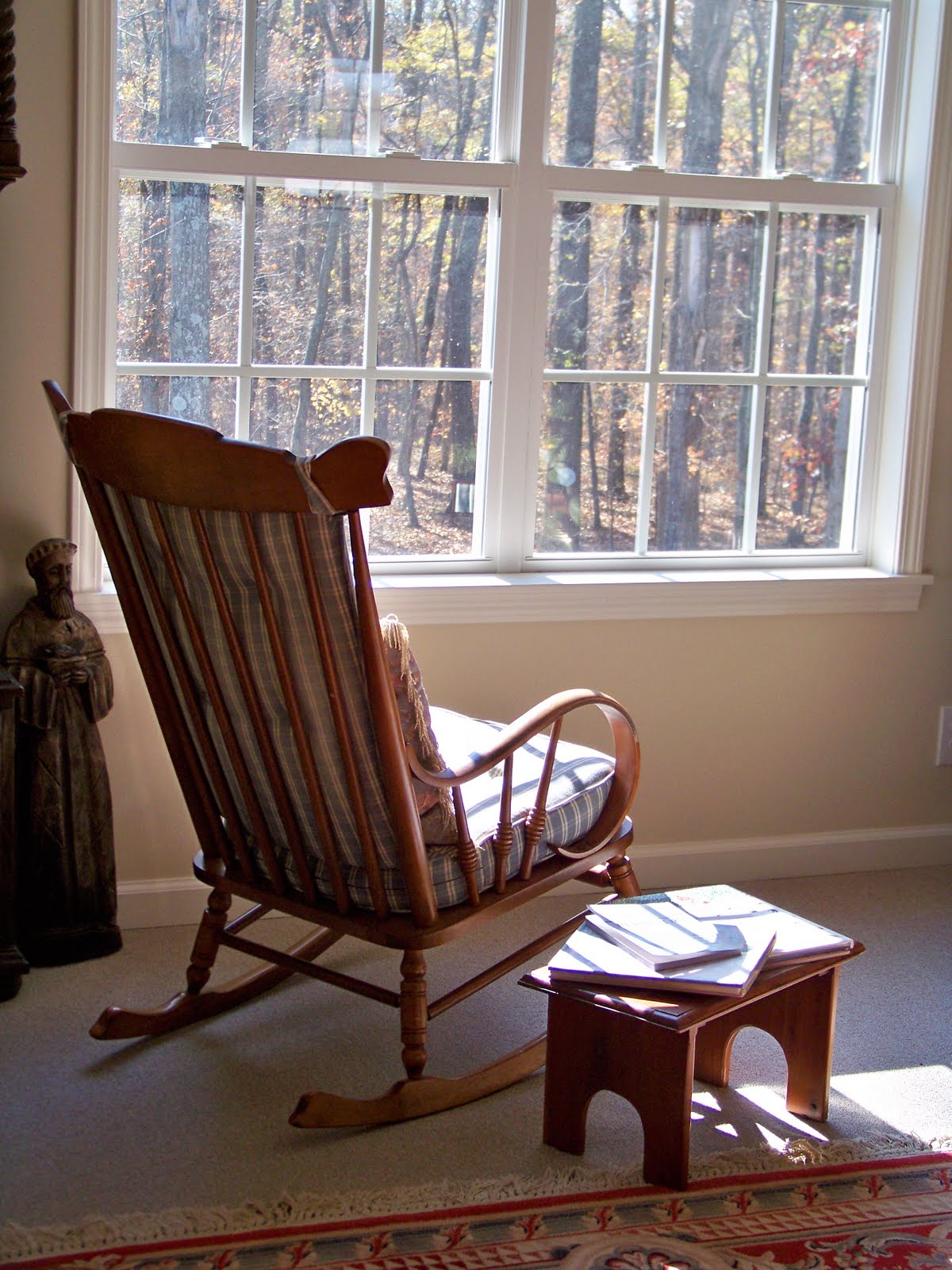
When I come, George is always in his big rocking chair.  It’s an antique, and no doubt belongs to him or to his family.  Its ornate woodwork and plush upholstery seem at one with his ever-present cardigans of cashmere and their buttons of bone.  Today’s colour is a pale mauve.  Yesterday’s was pastel green.  I think he may have one for each day of the week.

George does not speak.  Indeed, he has never made a sound in my presence, save for the occasional and unavoidable escape of gas.  I have learned that he has his own private nurse, and that he must have come from a well established family, for he is always impeccably groomed.  No hair out of place, moustache trimmed just so, manicured hands, cologne in just the right amount.  The nurse tells me that he is a veteran of two wars, and that he has not spoken since his arrival.  She encouraged me to come visit him with the cat, as nothing else had seemed to reach him.

The first two visits I made did not evoke a response.  I made no attempt to speak to him, save to ask him if he would like to hold the Captain.  His startling eyes stared at a point a little above him and to the right, as if in contemplation of a thing terrible or celestial, and he seemed not to blink.  The offer of the cat had no effect upon him, even if I set it gently in his lap.  The third time I came, I noticed that while his big hands rested palm down on the flat of the rocker’s arms, his right index finger was keeping up a steady beat upon the wooden surface.  Like a metronome, it never lost or gained time.  After watching this for a spell, I realized that each beat was exactly one second.  The clock on the wall confirmed this.

I will say that nine minutes had elapsed with his steady tapping when he stopped abruptly and turned his hands palm up.  His stare did not change, but he leaned forward slightly and brought his hands together.  I knew this was Captain’s moment, and I placed him gently into George’s hands.  He leaned back, gathered the cat to his chest, and for the first time guided his gaze away from its singular focus.  George was now present, at least for the moment, as he bent his head to study the purring animal he was stroking.  I could not see his face clearly, but I fancied I saw a slight crinkling of that grey moustache as a smile of serenity spread.  As he raised his face, his eyes were closed and wet with tears.  His bottom lip quivered before he regained some control, and then he handed Captain back to me.  I offered him a handkerchief.  He gave the smallest nod, and took it to wipe his eyes.

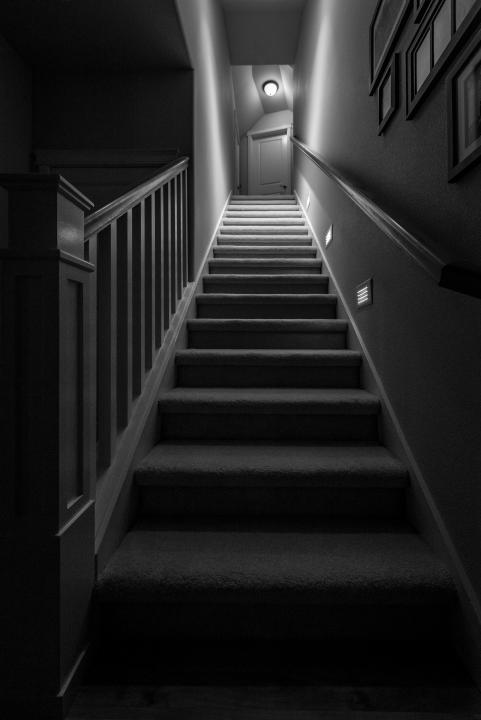
Two deep breaths he took, then raised his chin once more, his eyes moving back to that point inscrutable.  I then felt like an interloper, a voyeur, because I could see quite clearly that George was reliving something.  Terror, shame, blame, courage, and things unholy were shown out in the rendering of his spirit.  Now I knew that George had only been waiting.  Waiting at the gate.

A primal encounter

Man of Woman. Woman of Man. Child of the First.
Another, of the mirror, spies them through reed curtain by rocky slope.
Skulks, indecisive, for a time. The first he has seen, away from home hearth.
His fear, embodied. As the cat will hiss and spit, as the dog contrives a face and guttural growl upon the advent of the foreign other, he shows himself, thinking to do murder. Thinking to take their catch, feathered runners caught by the neck. Thinking his animal lust might be assuaged.

But Woman, Man, Child have wandered far, and know the defense of desperation.
He they subdue, and show their sabers of stone. When he awakens, bruised and bloodied, his ham hands are tied tightly with gripping vines. The timorous child brings to him meat, still warm from the hunt. He has no language. Gobbles the flightless bird-thing as it’s hung before his mouth. They take him down to the reeded pond. They drink, fill up skins. He eyes the several birds dangling from thongs about their waists. Man picks one up, holds it before him, points far and away to the setting sun. Motions with his hands that there are many of these things, a distance away. He must come with them, to eat.

And, along the way, he stops to gather plants in bunches. Eating the good parts, he offers some to the others. Their fear is plain, and they put their palms downwards. He eats more, smiles and pats his stomach. Wins their trust, and they do eat as well. In their walking, he shows them many kinds. Those that are good, and those that will kill.

In his home hearth, he had been a diviner, one to whom was given the hunch. One who had commanded his coven, so that they would prosper. Now, he would bring them the beasts of the land. And now, Woman, Man, and Child would gather without fear.

Disobedience

My body doesn’t understand my brain,
or do I have this backward?

Calcified circuits, perhaps.

Worn out paths.
Easy to go off the rails.

When eating, I bite the inside of my lower lip,
at least once a day.
The cut can’t heal, and it swells a bit,
offering a better target for next time.
Is this a consequence of something,
or a symptom of closet masochism?

Don’t “inhale” your food.
This is good advice which I do not follow.
Surely a symptom.
Storing nuts for the final winter.

I used to keep a long handled brush in the shower.
(For back scrubbing, and the relief of pesky itches.)
It was lost when we moved.
Now, I shower in an alcove of stone.
Hard, undrillable, impenetrable.
But advantageous to one with the itch.
I push up against it, and rub back and forth.
Ah, but what endorphins!
Each day, I stay a little longer.
This very morning, after the steamy session,
my wife said to me
“Why is there blood on your shirt?”

There is an expression, sometimes used to make one shut up.
“I’m going to duct tape your lips.”
For the darker side, you can see it on crime shows.
But I do it for real, every night,
so I won’t get leaks from the air mask.
Doc says “that’s just plain wrong”.
Also, I turn up the pressure.
Cardinal sin, because the sleep doc is supposed to do it
when needed.
But I found out how, and it helps to a degree.

I have never grown up, I think.
They are all ready to give up on me.
Disobedient.

No rush, no rush.

On the old dirt road,
all is calm,
all is bright.
A stand of cat-tails recovers from yesterday’s bent,
telling me which way the wind went.
Browning fronds dip down,
drawing degrees of their deaths from the snow.
Nothing here for anyone, really.
Nor for feather, fur, or fin.
Here I stopped for an insistent bladder.
With that taken care of, I turn to go,
but stay instead, for a moment or two.
If my party friends could see me now,
they might say
“there he goes with his mooning daydreams”.
It’s a peculiar time, a pausing time, a settling time.
All that has been, and all that will be
seem to have met at this nexus.
A thing, put off through doubt,
is affirmed, and I nod,
to no one in particular.
From my backseat toolbox, I grab some scissors.
Cat-tails.
She always liked them.
But these are not the pencil ones.
And they are dead.

In the waiting room

With the exception of an elderly couple, and a young couple with a toddler, I think everyone in the X-Ray waiting room, other than me, was staring at their phone.
It was the “please take a number” system, and I lucked out by having mine called about two minutes after I sat down.  It was, however, just a preliminary registration, and you still had to wait for your attendant to call you in.

To pass the time, I normally just people watch, hopefully without being too obtrusive.  If someone makes eye contact (increasingly unlikely these days), I smile and say a couple of pleasantries, perhaps remarking on their cute baby.  Today, there was silence, except for the old man and woman speaking in low tones, and the woman behind the desk, who would call out every few minutes “number eighteen?  Is there a number eighteen?”  After the third or fourth repetition of this, I suggested she could take a coffee break.

A man and woman walked in with a seven or eight year old boy.  They sat down without taking a number. The boy amused himself by picking up books, dropping them on the floor, running around the room , trying on another kid’s hat, and…..you get the picture.  His parents sat looking at their phones, and finally, after some glances of displeasure from across the room, the dad grabbed him by the arm, shook him, yelled at him, and plunked him down in a chair, whereupon he started to wail.  “Number eighteen, number eighteen?” sounded again, and they realized they needed to get up and grab the ticket.

The young couple with the toddler, who was remarkably well behaved, had him sit on his Mom’s knee, and she began to read quietly to him, from a Dr. Seuss book.  She made each character come alive, and her child was in rapt attention, his glance going from the book, to his mother’s eyes, and back.  It struck me that this scene made a little tableau that was like something out of a Christmas card, or a child’s storybook.  I was so taken, that the woman looked up and caught me staring.  I reddened a little, and smiled.  She smiled back, and continued with the reading.

I am nothing if not a sentimentalist, and this seemingly blissful family brought me back to the days when I used to read or sing my own children to sleep, and I thought “if they remember nothing else, I hope at least that they remember that.”

What meets the eye

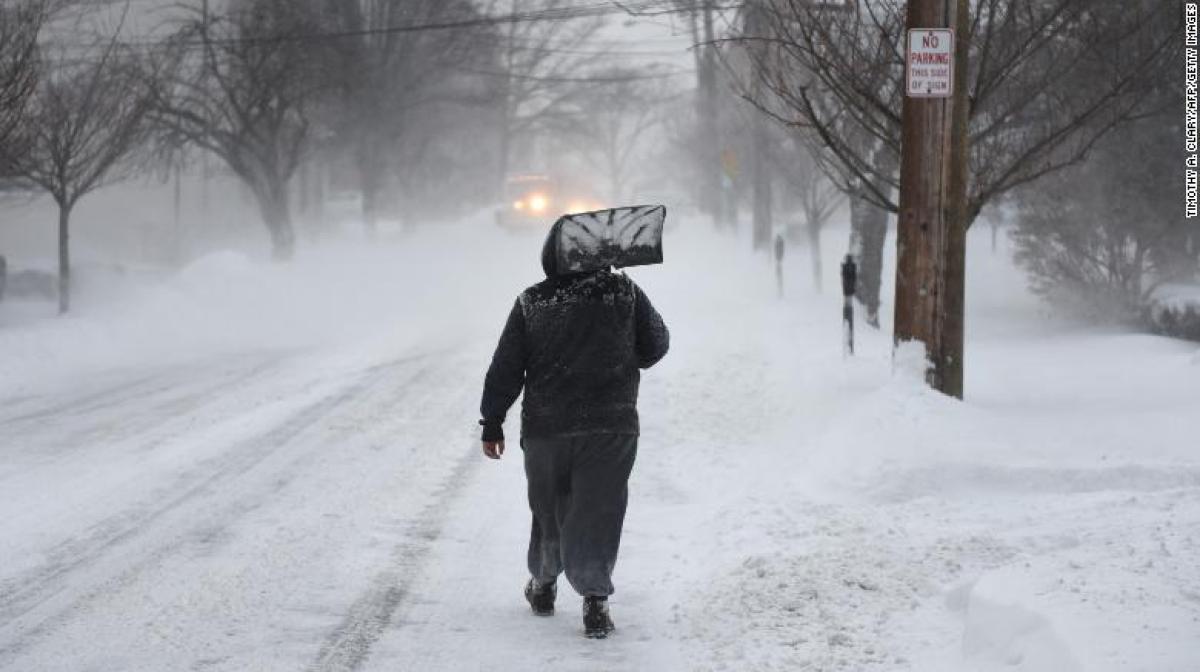
There was a little girl who brought her little girl to piano lessons, thrice a week, or was it twice? They lived in a wintry white town, weighted down with more and more snow each day, in the past week. This girl drove a red pickup, and, each appointed night at 7:00, she would pull up to the curb, bring her child to the door of the house, then sit and smoke in her truck while waiting. At first, she did not notice the old man across the street, being concerned with her phone and cigarettes. When she did look up, to flick a butt out her window, she saw that he was doggedly trying to start his snow blower in the dimly lit garage. She grinned a little, to herself, and went back to Candy Crush. Ten more minutes went by before she knew it, and she saw that he had ceased his labors. He stood, shoulders slumped, with one foot up on a stack of old tires. She thought he was crying, but he was only catching his breath. When her little girl came out the front door, she took her and strapped her into the car seat. By the time they made ready to go, she stole one more glance at the old man. He hadn’t given up yet, and was starting to shovel a pathway by hand through the foot deep drifts. Shaking her head, she thought “crazy old fool, he’s gonna kill himself. You hear about it all the time.”

The old man was confounded. Why wouldn’t it start? There was fresh gasoline (super), antifreeze, and a new spark plug. Try as he might, no use. He knew it wasn’t flooded, ’cause he’d only primed it a couple of times. He’s used to seeing cars pull up across the street, but he doesn’t take too kindly to being stared at, and especially to being laughed at. He takes her grin to be a mocking one, and, coupled with her greenish hair, nose ring, and neck tattoo, she fits his idea of a young punk. hmph, or something like that, he thinks. After catching his breath from pulling at that blasted starter (he counted 49 times), he got out his shovel and looked doubtfully down his drifted driveway. Well, there was nothing for it. He would clear at a least a small pathway before his daughter got home.

Two nights later, and there was the girl again. And there he was again, with his red plastic shovel. She watched him take scoops out of the white drifts, then pause for a few moments, leaning on the shovel. As he attacked the snow for a third time, she got out of her truck.

Oh no.  Is she actually gonna talk to me?  he thought.  And she came, still puffing her smoke.  “Still can’t start your blower, huh?  What else you got in your garage there?”  “I’ve just got me this shovel, is all.”  “Okay, but what’s that I see back there?  Isn’t that one of those big scoops you push along?”  “Yeah, I can’t push it”.  “Let me try”.
And in the time it took to light up two more smokes, she had it done.  “Hey, can’t you get someone to fix that blower?” says she. “My cheque don’t come ’til the end of the month.” says he.  “Well, mister, my boyfriend’s a mechanic and he runs a snow plow too.  He’ll come and fix it, never mind.  And on the real bad days, I’m tellin’ him to come do your drive.”

And so, in the dark sparkles, Erica puts her two hands on his shoulders, turns him around, gives him a pat on the behind, and says “Now you can go have a cuppa tea.”
He turns back to her, wipes his tears, and says “You come too.  And bring the little girl.”


Take me back

So long ago.  The steps.  The regrets.  The loves, the tears and the joy.

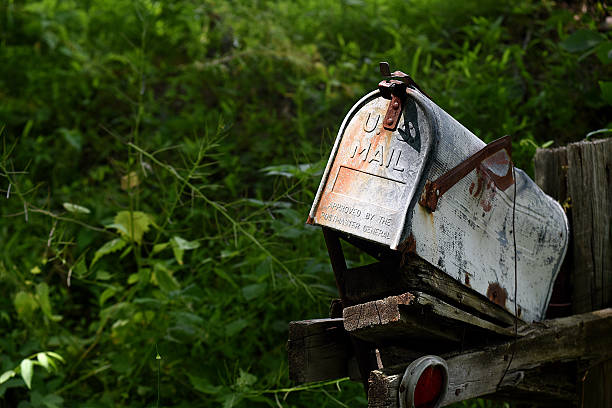
We lived on a dirt road, across from an old shanty house.  At the road’s edge, the house had a bright metal mailbox whose door was embossed with U.S. Mail.  The sunny side of it, stenciled in black, read W. Sweeney.  It was the only new thing to be seen on that property.  The day its post was anchored and its box screwed down was, I think, the first time we saw the Mister up close.  He had tipped his hat to us as we watched unabashedly, but had said nothing.  The crowning touch to the mailbox was a large iron triangle, painted bright white, that supported it and anchored it to the post.  It was open work, and had fanciful curlicue designs all through it.  I thought it very fine, for I had never seen a thing so beautiful and new.

Mark and I were seven and nine, and did not know much about very much, but we did know that we lived in Canada, not the U.S. of A. , and that was funny.  In the exuberance of a youthful day, and the ennui of country life with an absent father, we always got the most out of anything that could make us chuckle.  Consequently, we ran around our yard shouting USA!  USA! until we were out of breath and rolling in the grass.

The Sweeneys were our brand new neighbours, having bought the place “for a steal”, more for the land and the broken down farm equipment than for the house.  They had plans.  So said their two little tykes, a boy and a girl, only slightly younger than us.  On the day they moved in, their mother (one Janet Sweeney) had ushered them into our drive and had made hasty introductions, leaving them to play with us and stay out of the adults’ hair for a while.

We were smart enough, at least at first, not to tell them The Story about their old house.
You see, we had only found it out through accidental eavesdropping.  A family named Gilhooley had lived there long before we came, and had been there many years before we were born.  The story was that they were very poor, and had failed at farming.  Mister Gilhooley owed money around town, and so it came that they were going to lose the farm.  He had just gone out to the barn one night and pulled the trigger.  What happened to the family after that, we never knew.

The Sweeney boy, Lucas, was something of a bully.  He liked to be “in charge” of any game we were playing, and fancied himself The King of Everything.  And I, being the eldest kid on my side of the road, should have been the one to challenge him.  I confess that I was not much good at it, and suffered many humiliations.  He had a sister, two years his junior, whose name was Rosie.  As we became more comfortable with these two, it was evident that she was the more mature of the siblings.  Rosie and I became fast friends, and it was not long before Lucas was put in his place.  She held thrall over him, and apparently had a memory bank full of his dastardly deeds that she could use as currency at any time.

When Mrs. Gilhooley had gone to live with her sister, after having been evicted by the bank, there was one thing of value that was left in the house.  It was a piano.  An “upright grand”.  To me, it was a thing of beauty, and it looked almost new.  The whole house seemed to have been built around it.  The bank had seized it against money owing, and were preparing to auction it off with the rest of the chattels when Mister Sweeney made an offer they couldn’t refuse.  Rosie was learning to play it, and indeed they were having her tutored twice a month, an expensive undertaking for a farm family.  Lucas showed no interest, except a sullen resentment that he was being “tutored” to run the farm equipment while money was spent on his little sister .  My brother Mark took more of an interest in the farming than did he, and was over there every chance he got when their Dad started the tractor.

And me?  Well, I listened for the whistle.  Rosie’s whistle.  She was one of those people who could put two fingers in the mouth and produce that loud and piercing sound.
To me, it meant Piano Time.  She was becoming better at it with age, and she knew I shared her fascination for it.  Her patience with me was remarkable.  We sat side by side on the wide wooden bench, and I would play some off notes in between hers just to get a rise out of her.  We would wind up pushing each other off the bench in laughter.

Rosie’s lessons were usually on Tuesdays, and one of these dawned in a cold dribbling rain.  She knew I would be watching, waiting for the teacher, so, instead of whistling,  she waved at me crazily from her fogged up window, sticking her tongue out.
Markie was getting himself ready for whatever farm work they would do on a day like this.  In his oversize gumboots, yellow slicker, and strap-on rain hat, he looked pretty comical, and more so when he made sure to stomp on every puddle he could find on the way.

Mother said I could run across without boots if I would take an umbrella and stay out of the puddles.  It was a good thing that I was bused to school, because if I ever was seen toting an umbrella, I would have been the laughingstock of the schoolyard.  But to see Rosie, I would have worn Markie’s outfit as well.  Today was kind of special, being the first time I had been invited to sit in on a tutoring session.  Rosie had pleaded my case with her mother, who had relented, and there was even a nice lunch of home made French fries and Dr. Pepper.

Rosie’s teacher, Mrs. Turnbull, was just taking her leave when there was a commotion from the back door.  Mister Sweeney yelling “Lucas, get twine and some short pieces of kindling, right now!”  “Janet, I need as much of your thickest fabric as you can bring!  Then call the hospital!” Mrs. Turnbull, Rosie, and I ran to their back mudroom to see what was the matter.  There, on a flat bench, was Markie.  He was wrapped in a heavy grey blanket, soaking through with blood.  His boots were gone, and he looked dead, his hair in ringlets sticking to his head.  “Ronnie, go and get your mother.  We’re bound for the hospital!  Go now!”  I ran crying, crying through the blackening rain.  Shoeless, I slipped on the wet grass and split my lip on the cement steps.  Mother saw me right away and let out a scream, yelling questions how did it happen?  I sobbed out “It’s not me.  It’s not me.  It’s Markie.  Let’s go.  We gotta go now.  Hospital.”

By the time I got mother over there, Mister Sweeney and Janet had already made three tourniquets to staunch the flow from Markie’s wounds.  I can’t describe what he looked like, and I won’t.  There had been an avoidable accident.  The two boys had been fooling  with machinery.  There was enough blame to go around.  I sat in the back of the station wagon with Markie, holding his hand.  He was breathing, but shivering.  His eyes were closed and tears ran down his cheek.  The hospital was fifteen minutes away, and they were waiting for him.  We had an unexpected Police escort the last few minutes of the trip.

My Dad was notified, and he went rushing back from some town he was staying in for his sales meeting.  It would be an overnight trip of several hundred miles.

Markie died that night from blood loss and sepsis.  We weren’t in time.

A famous songwriter once said “Does anyone know where the love of God goes…..
when the minutes are turned into hours?”  The Sweeneys drove home in the night’s stony silence.  All in shock.  All mechanical motions.  I couldn’t say goodbye to Markie.  He never saw his Dad again.  Mum and I stayed at the hospital and waited.

~~~~~~~~~~~~~~~~~~~~~~~~~~~~~~~~~~~~~~~~~~~~~~~~~~~~~~~~~~~~~~~~~~

Dad had to stay with us awhile.  Mum was inconsolable.  As for me, I spent much of my time in our treehouse out back.  I tried to help with the cooking and cleaning, as Mum had lost interest in those things.  Attempts to cheer her up were met with either anger or tears.  Some weeks after that day, and even though it was raining once again, I had taken a blanket and closeted myself up in the tree with a couple of peanut butter sandwiches and some comic books.  I had really lost three people.  Markie gone, and Mum and Dad not the same anymore.  I began to blubber uncontrollably, hitting my fist on the barky wall until I bled.

A knock came, and, with my nose still dripping, I pulled back the makeshift door and let Rosie in.  Neither of us said a thing.  I could not look at her yet.  She squatted down beside me and put her arm around my shoulder, leaning her head against mine.
“I love you, Ron.” is what she said.  We stayed that way for a time, then she left.  But not before saying “Just remember.”

The next spring, we moved away.  We had to follow Dad with his business, which took him further and further away.  Rosie was sent to a private school, and was getting room and board in town.  We had to say goodbye.

The years are thirty since then.  Funny, but I have never married.  Instead, I have followed in my old Dad’s footsteps, punching the time and climbing life’s long ladder.  Mum died of sadness, I think, some years ago.  Dad continues on and on in a little apartment.

And, on this hot mosquito night, I make a turn that I hadn’t planned on.  Or maybe I had.  The road is still of dirt and gravel, and the dark is coming on quickly, but I know my way.
Our old house still stands, but it’s been added onto in a patchwork way.  Clothes flap on the line, and there’s a new hydro pole out front.  Across the street,  there’s a new house of red brick.  I wonder who lives there now.  I stop for a second and see, in the beam of my headlight, an old mailbox, dented now and leaning.  There is no readable name on it, but next to it, on the lawn, is a new sign.  It says “R. Sweeney- Piano lessons.”

Photo by Thomas Shanahan

Outcasts

Charles was a big kid now.  Twenty something.  Outgrowing successive wheelchairs.  Club footed, with God-given neural and cognitive impairments, he was a savant with a clean and bothered soul.   Father long gone to Timbuktu.  Mother unfit.  Now, in these formative years, he is in the “care” of the godparents- whom God would never have chosen.

My wife said to me “You go and see Charles.  You help him.”  I’m on a three-hundred-mile business trip, and his given address is another hundred from there, but I go.  We used to be friends with his mother, until she fell apart and left him to his fate.  I’ve not seen him for twelve years.

It’s in a sad town, made more sad by a dirty spring.  He lives up three flights in a pockmarked apartment building with rusted iron fire escapes in the back. As I pull up to park, there’s an old man in his undershirt, leaning on the railing of his iron balcony.  He takes the last puff of his smoke and flicks the butt in my direction.  With the tilt of his head and the slow point of his finger, he draws my attention to a curious scene in the far corner of the lot:  It’s night over there, and a crappy-looking house trailer sits leaning to one side.  It’s missing a wheel, and chunks of wood and board have been shoved under the axle.  A rusty red pickup pulls up in a fast hurry, and an old guy and his grandson get out.  They quickly roll up a replacement tire and begin jacking up the trailer.  The tire is too big and touches the wheel well, but they bolt it on anyway.  Grandpa grabs an axe from his truck and chops away at the plastic around it.  And off they go, farting black smoke into the afternoon glow.

I walk around to the front entrance.  In the terrazzo lobby, there’s a block of mail slots.  I find what I’m looking for:  “A. Merrick- 313”.  The elevator has a piece of paper taped to its door:  OUT OF ORDURE.  It looks like it’s been there a while, showing fingerprints and the legend “Fix the fucking thing!”   I think What the hell, he’s in a wheelchair.  How do they get him up and down the stairs?

I make it to the door, smelling various culinary delights on the way up.  The peephole is missing its peeper, and through it I see an iris with a somewhat enlarged pupil.  “Who are ya, eh?” says someone in the voice of Marge Simpson. I’m Mack.  You don’t know me, but we were friends with Charlie’s mother.  Does he still live here? The door opens, and there stands the spitting image of Margaret Atwood in a sweat- stained sun dress.  “Yah, yer right, I don’t know ya.  And it’s Charles to you.  Whaddya want?”
Just to see him a minute.  It’s been a few years.  “Hey Charlie!  You got a visitor!”  “And, by the way”, she says to me, “I am Charlie’s fucking mother now”.

In a floral chair in the living room’s corner sits a nicotined man with shiny pants and a fedora.  “Day to you”, he says.  Then I hear a squeaking and a creaking as Charlie wheels himself out of a side room.  The boy has become the young man.  His eyes still pierce, belying his slow and diffident manner. I read years of regret in his gaze.  Anger and helplessness.  On a blanket in his lap is a bowl of soapy water and an antique double-edged razor.  Chicken pox of toilet paper dot his face.  His chair has two different wheels:  an original one, and a bicycle tire crudely attached to the other side.  They almost match in height.  Almost.  Then I notice that these bastards have plenty of smokes and some unopened forty ouncers of Johnny Walker black sitting on their mantlepiece.

Charlie looks at me quickly, then puts his head down.  “Mister.  Mister Mack.  I know.”  Charlie.  I’m happy to see you. I take his hand in both of mine. Do you remember Julie, my wife?  You always called her Auntie.  She asked me to come and see you.  I think she cares about you a lot, Charlie. (The Clan, sitting on their behinds, make wry smiles.  There’s a snort of derisive laughter).

“I like Auntie.  I like Auntie.  Where’s Auntie?” She couldn’t come today, Charlie, but she sent this little box for you. He opens it to find, wrapped in wax paper, hard toffee, broken into shards.  He loved that when he was little, so much so that he had pulled out one of his fillings during a lengthy chew.  Now, he makes a crinkly smile and I see a flicker of joy within his eyes.  First thing he does is pass me a chunk.  I can see a few pairs of eyes following his motions, and I think I know who will get the toffee when I leave.  I pass the piece back to him, eyeing his protectors. You know what?  Julie says you must keep every piece for your own self.  She says there are fifty-two pieces here, one for each Sunday morning for a whole year.  Okay?(She said no such thing).  The nicotine man gets up and opens the Johnny Walker.

“Hey, Chollie, what about a trade?  One shot of the good stuff, and everybody gets a piece of yer candy? Show the nice man what you did last time you drank some Johnny W.  C’mon Chollie!”
Charlie’s jaw quivers.  His eyes show anger, but also a resolve to take the challenge.  He motions to me to put away the blanket and the shaving stuff, then puts his ham fists on the arms of his wheelchair.  With a great effort, he pushes himself up, quickly grabs the bannister, and brings himself to a standing position.  He’s shaking, and his one knee wobbles.  I fear for his safety, and stand up to help support him, when Margaret Atwood says “No!  Leave him!  It’s his pride.  Right, Charlie?  Come on, show the man what ya can do.  Come to Mama!”

He turns, nervously lets go of the bannister, and makes to walk towards her.  His jaw works, and now his head shakes as if from palsy.  He puts his two hands out in front of him and pushes one foot forward, then brings it back uncertainly.  The knee wobbles again, and I move towards him.  She again yells “No, don’t!”, but before I can grab him, Charlie falls backwards.  He hits the top of the stairs at about waist level and tumbles all the way down.  Fourteen steps.  I scream you bitch, and there’s silence as I run down to him.
Mister shiny pants and his hillbilly neighbor stumble down to help me, one still carrying a bottle of beer.  Charlie has a dislocated shoulder and large lump and cut on his head, but he’s conscious.  He holds one hand in an odd position, and I see that his wrist is broken.  He doesn’t cry out.  Nothing at all.  Just has a beseeching look, and his nose is dripping onto the floor.

The rest of them file down the stairs.  I say call the goddamn ambulance. They all look scared.  Shiny pants sets down his beer and disappears into the streets.  The others go back up to the landing and I hear a hushed conversation.

***

It’s been ten years now since Julie said she wanted to take care of Charlie.
She had a true instinct for rescuing injured or helpless things, be it a stray cat, someone’s discarded houseplant, or a handicapped mother and son abandoned by the father and trying to survive on a pension.  “She’s no good, his mother. You know that, Mack.  And it won’t be long before she dumps him on somebody.”  I had replied that he had godparents and that was the end of it.  We had no legal authority to take him in.

My motives, however, were impure.  Factually I was correct, but in my heart, I had dreaded the responsibility, the disruption of our household, and, most of all, the division of Julie’s attentions.  After all, she had taken in this guy named Mack, all those years ago, and had made him her life’s project.  This angel deserved so much more than she ever got from me.

On this brown Monday morning, I sit in Charlie’s hospital room.  He’s sleeping, in a morphine snore.  He’s in pinstriped flannel pajamas, exactly like the ones I wore in a polaroid taken when I was eight.  A cast on his arm.  A swollen red hand.  Stitches on his forehead (more swelling), and adhesive tape on his nose, which was broken as well.

A nurse comes in, smiles, and picks up his chart from a clipboard on the end of his bed.  “You must be Mack?  Charlie’s spoken about you. You know, this kid is pretty surprising.  You’ll see.”  She tells me that he had had a concussion and was being kept under observation for a day or two.  And then, in confidence, that she knew his “family”, including the godparents, who apparently were leaving town.  They had seen the writing on the wall, and knew that, even if they could avoid charges of neglect, their monthly cheques for Charlie’s “care” would dry up pretty quickly.  Goodbye Johnny Walker.  Charlie would become a ward of the state.

***

It’s Tuesday morning, and I take the clacking elevator up to his room.  Nurse McDonald is there, all smiles, as Charlie sits on the edge of his bed.  “Show him!” she says to him.  He smiles a wan smile and stands up, more steadily than I have ever seen him.  “Go on”.
There’s that peg leg gait with his club foot, but he makes it to the end of the room and back, without touching anything.  Red faced, he sits once more, with exaggerated grace, on the edge of his bed. Unbelieving, I get up to hug him, and just then the phone rings in the room.  It’s Julie.  She’s been on the bus for the last five hours and will meet me at the station.

Miss McDonald, full of pride, says she’ll check in with us later.  After a good chat with Charlie, I tell him I’m going to get a coffee and something to eat.  In the downstairs café, I sit alone and think about how our lives will change, both ours and his.  There’s something within me that’s too rigid, stolid, unyielding.  A shield of sorts that spurns all attempts at closeness.  Unworthy of a man who thinks he is otherwise a good man.  In a peculiar state of mind, I nod, as if in answer to an impatient questioner.  I rise and go back to the room.

Charlie’s out, presumably doing some escorted physio somewhere in the hallway.  I sit and wait for a couple of minutes, and then I figure I’ll go to the nurses’ station to see what’s up.  There’s just an orderly there, and he explains that they’ve had an emergency and he’s just minding the store for a few minutes.  I ask him about Charlie, and he says he’s probably in the bathroom, did I check?  I get back to the room, and I see that my long overcoat, my hat, and my gloves are gone.  No Charlie.  I check the bathrooms and run to the desk.  The poor guy is upset and runs down the hall to raise the alarm.

***

Every spring, this little town holds a flower parade, full of wishful thinking to ward off winter’s brownness.  This is what I see, in my frantic driving about.  The hospital is abuzz, and there are a couple of cruisers searching the streets.  They avoid infiltrating the parade for safety reasons, and circle around the empty avenues.  I am due to meet Julie in an hour.  I don’t know what the hell to do, so I go back to my motel room to collect my things.  Still in a panic, I drive back to the hospital.  The baton twirlers and bagpipers are rounding their last corner, when I spy something a little out of place.  Someone limping along in a black overcoat, with a fedora pulled down to shield his eyes.
Six inches of pin striped pajamas and a pair of tan slippers show beneath the coat.  You would think they would have been a dead giveaway.

I screech to a stop, mount the curb, and run up to him.  He’s laughing and clapping his hands, even with that cast on.  He stops and hugs me.  I turn red, and tell him he’s gotta come with me ’cause we’re meeting his Auntie.

We’re twenty minutes late, and Julie’s there waiting.  Charlie’s still in my coat and hat and his slippers, but I get him out of the car anyway.  He doesn’t recognize her right away.  After all, my lady has gotten pretty grey from her cares.  He clings to me, but I drop his hand.  I give him the littlest of pushes.  Over to the one who cares.

The one who mends.

Joshua’s choice

I had a brother…..I have a brother!

Michael and I were separated during the great invasion of 2067. World communications had been disrupted, or destroyed altogether. The last I knew, he had been working in the space program. There were missions to Mars that had taken flight before and after the invasion, but I did not know if he was involved with them. Word of mouth had it that some of the missions were lost, and I had feared the worst.

Khostra did indeed return to us at dusk of my second day with them. After “speaking” to Raymond and some of his group, she signaled for me to come and sit. As before, we joined hands. My surroundings greyed out, and I began to feel excited, expectant, and very alert.

I cannot render the name of her people into language, so I will call them Plejarens, a reference to their place of origin.

She began by telling me that she had been in communication with a group of her people who had returned to Mars, after its great calamity, to collect their dead and to search for possible survivors. Unexpectedly, they found a colony of men, women, and children. The two peoples had met, and, through a young girl who was a perfect empath, communication had been established. When the Plejarens found that the colony was in peril because of the events on Earth, they proposed to rescue them by offering safe passage to a new home in the stars. Fully two thirds of the settlers decided to go. The hundred or so remaining believed they had the stuff to make the colony survive, and, in time, prosper.

Before their departure, the Plejarens told the colonists that ancient settlers from the Pleiades still remained on Earth, but were preparing to leave. Realizing that communication with them might be possible, the colony drew up a list of the names of every single person on Mars, in the hopes that some of their kin still surviving back home would know their fate.

My brother’s name was on that list, but my joy was tempered. Michael was one of those who had left for the unknown.

In the here and now, on this sick old Earth, many of the Plejarens were leaving. My group of fellows had decided, almost to a man, to go with them.

But, Khostra and some of her hundreds would remain. They had a plan. One whose success was uncertain. One whose fulfillment might take a lifetime of men. The machinery was already in place.

They were going to terraform Terra. My home. My life. My Earth.

In the morning, I said my goodbyes…..to Raymond and his band of explorers.
I would stay. I would help. I would remember Michael.

Earth, Mars, and beyond.

“Raymond, before you ask, I know who they are, where they have been, and where they are going.  I know, perhaps, why you are all so happy, but I am puzzled as to why there’s so little dissention amongst you….I’ve been told things that amaze me, excite me and fill me with awe.”

Raymond smiled, put a hand upon my shoulder, and said “Yes, we’re all going, Joshua.  But you knew that.”  I fell silent, and he motioned for us to sit at a small table, the private corner.  

I related to him how Khostra had imbued my dreams.

Her people were of an antiquity that we cannot encompass.  One that even their own scribes fall short of in their stories, ending at a guess.  Their origin was in the star cluster we know as the Pleiades.  Over millions of years, their civilization grew in power and influence, and they began a push to explore their known universe.  Of their ancient homes, our Earth was one, until the great calamity of the Cretaceous period.  Their numbers were decimated, and those that remained fled in search of salvation.  Some had settled on the planet Mars.  The hearts of others desired a return to the lands of their peoples’ birth.

The Martian choice proved well for the new settlers, who prospered for millennia.  In the end, as we know, that planet became desolate after losing almost all of its atmosphere and water, and they had no natural protection against asteroid and meteor strikes.  Over hundreds of years, they prepared their great leaving, most heading across the void to the Pleiades.  Some few chose to return to Earth, found it to be habitable again, and stayed.  They became teachers of men when humanity sprang from the dust.  But their numbers eventually dwindled, and those that lived on became secretive, building underground bases that few had stumbled upon but had somehow forgotten.

And now, in this hour of Earth’s shame and destruction, they were leaving once again.
But not all.
Khostra and some of her hundreds would remain.  They had a plan.  I held a hope after these last lonely years.  I thought I had lost my brother in this time of our world’s chaos. In her magic, Khostra knew that this was not so.  She had more to tell me….

to be continued…..